Gutters: Sizing the Run, Guards, and Why They Belong on the Same Visit as the Roof
A gutter that's undersized or clogged sends water exactly where you don't want it, right along the foundation and under the eaves.
September 10, 2026 · 4 min read
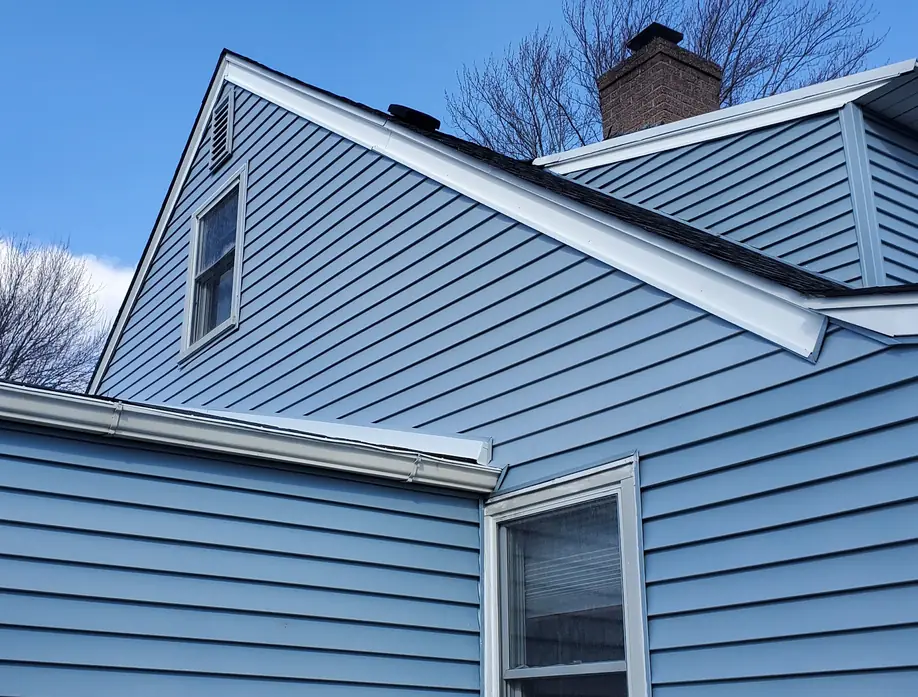
Gutters get thought of as an afterthought to the roof, something you deal with once the shingles are picked and the roof itself is sorted. In practice, the gutter system is doing a specific job, moving a large volume of water off the roof and away from the house, and getting it wrong causes problems that show up nowhere near the gutter itself, in a damp basement, a rotted fascia board, or soil that's eroded away from the foundation.
Why sizing the run actually matters
A gutter run has to be sized to the roof area draining into it, not just to whatever was already on the house. A roof with a lot of surface area feeding into one downspout, or a long run with only one outlet, can overflow in a heavy storm even if the gutter itself is in good condition. That overflow doesn't stay near the gutter, it runs down the side of the house and pools right at the foundation, which is exactly the spot you don't want standing water. Getting the run length, the number of downspouts, and the pitch right is what keeps a gutter doing its job in the kind of heavy, fast storms this area gets.
Where the downspouts actually discharge matters almost as much as how many there are. A downspout that dumps water two feet from the foundation is only moving the problem a short distance, not solving it. Extensions or a proper grade away from the house are what actually gets that water clear of the basement and the crawlspace.
Seamless gutters and why the seams matter
Seamless gutters are formed on site to the exact length of the run, rather than assembled from shorter sections with joints. Fewer seams means fewer places for a gutter to develop a leak over time, which matters more than it sounds like on a house where a slow gutter leak can run down the fascia board for years before anyone notices the wood underneath has gone soft.
What gutter guards actually solve
Guards cut down on the debris that builds up inside a gutter, leaves, seed pods, granules washing off an aging roof, which is what causes most clogs and overflow. They reduce how often gutters need to be cleaned, they don't eliminate the need for it entirely, and the type of guard that works well under a tree that drops small debris isn't always the same one that works well under a tree that drops larger leaves. It's worth matching the guard to what's actually falling on the roof rather than picking whatever's cheapest.
The type of debris falling on a roof varies a lot by property. A house shaded by oaks deals with a heavy leaf drop for a few intense weeks in the fall. A house near pines deals with needles dropping steadily most of the year, which clog differently than broad leaves and can slip through guards designed mainly to stop leaves. Walking the property and looking at what's actually growing nearby is part of getting the gutter system right, not just measuring the roofline.
Signs your gutters need attention
- Water spilling over the front of the gutter during a normal rain, not just a major storm
- Gutters pulling away from the fascia or sagging between hangers
- Staining or streaking on the siding directly below a gutter section
- Standing water or soft ground right at the foundation after it rains
- Plants growing out of the gutter, a sign it's been holding debris and moisture for a while
Gutters left clogged going into winter are also part of what sets up an ice dam. Standing water and debris in a gutter freezes solid, and a gutter that's already blocked with ice has nowhere for the next round of meltwater to go except back up under the shingle edge. Clearing gutters before the first hard freeze is one of the simpler things a homeowner can do to reduce that risk.
Why we handle gutters on the same visit as the roof
A roof and its gutters work as one system. Ice dams start at the eave right above the gutter line. A roof shedding granules ages the gutter faster. A gutter that's overflowing can send water back up under the shingles at the edge of the roof. Looking at one without the other misses half the picture, which is why our roof visits include the gutters, and our gutter visits include a look at the roof edge above them.
We install and clean seamless gutters and gutter guards across Montgomery and Bucks County, and we offer a $100 roofing and gutter tune up that covers both at once. Call (267) 688-3163 or ask about it on your next inspection.
Aronson Roofing and Siding, (267) 688-3163
Call (267) 688-3163More articles
What Ice Dams Actually Do to a Pennsylvania Roof
A hard freeze followed by a warm afternoon is exactly the weather that builds an ice dam at your eaves, and most homeowners don't notice until the ceiling stain shows up.
Roof Repair or Replacement? The Questions Worth Asking First
A stain on the ceiling doesn't tell you whether you need a patch or a new roof. What's underneath the shingles usually does.