What a Siding Crew Finds When the Old Course Comes Off
Choosing a siding color is the easy part. What's underneath the old siding is what actually determines how the new siding performs.
September 10, 2026 · 3 min read
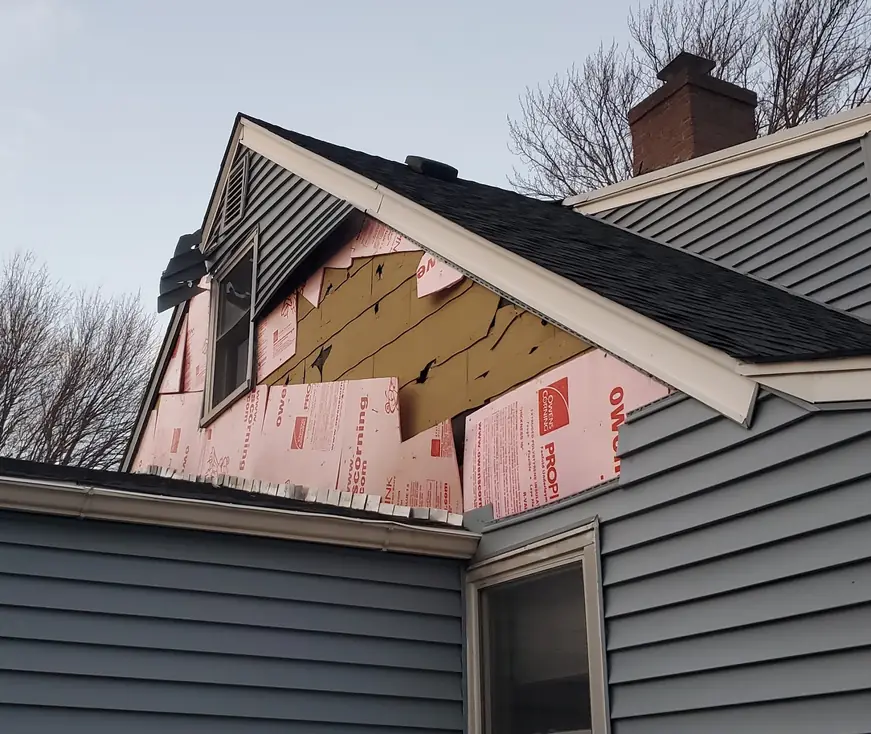
Most people planning a siding project spend their time picking a color and a style, which makes sense, that's the part you'll look at every day. But the part of the job that actually determines how the new siding performs for the next twenty or thirty years happens before a single new piece goes up, once the old siding comes off and the wall underneath is exposed for the first time in decades.
Insulation and sheathing condition
Older homes in this area were sided at a time when insulation practices were very different from what's standard now. Pulling the old siding off is often the first real look anyone's had at the wall since it was built, and it's a chance to add or upgrade insulation board underneath the new siding rather than just covering the same wall again. It's also the point where you find out whether the sheathing underneath, the plywood or board the siding is actually fastened to, is solid or has soft or rotted sections that need to be addressed before new siding goes over it.
On some of the older homes we work on, the siding coming off today isn't the original. There's an earlier layer underneath, sometimes wood clapboard, sometimes an older style of shingle, added over rather than removed decades ago. That earlier layer changes how the wall behaves once it's opened up, and it's another reason the tear off itself, not just the estimate beforehand, is when the real picture of the wall shows up.
Moisture, and where it's been getting in
Water finds its way behind siding more often than homeowners expect, usually not through the siding itself but around windows, at corners, or wherever two materials meet without proper flashing. Once the old siding is off, those spots are visible, sometimes as staining, sometimes as soft wood, sometimes as a section that's clearly been wet for a long time. Addressing that properly, not just siding over it, is what keeps the same problem from reappearing a few years later under the new material.
Trim, flashing, and the details nobody sees once it's closed up
- Window and door trim that's rotted or pulled away, which needs to be replaced or capped before new siding goes around it
- Flashing at corners, around windows, and where the roofline meets a wall, checked and corrected if it's missing or installed wrong
- Old fasteners and furring strips that won't hold new siding properly
- Gaps or old caulk that's failed and let moisture track behind the wall over time
- Areas where a previous repair was done differently than the rest of the wall
A wall can look fine from the sidewalk and still have most of these problems hiding behind it. That's not a knock on the previous siding job, most of it was installed correctly for its time, it's just that decades of weather, freeze and thaw, and ordinary settling finds the weak points eventually.
Why this matters more than the color
New siding over a wall with hidden rot, bad flashing, or no real insulation looks good in photos and causes problems within a few years. The color and style are what you'll notice, but the work that actually protects the house happens underneath, where nobody will ever see it again once the new siding is up. That's why we walk every wall as the old siding comes off rather than just moving straight to installation, and why we address what we find rather than covering it over.
We photograph what we find as the old siding comes off, so you can see exactly what was underneath and what we did about it, rather than taking our word for it once the wall is closed back up.
Cedar shingle, clapboard, dutch lap, or vinyl
Once the wall itself is sound, the choice of new siding comes down to look and maintenance. We install cedar shingle siding, clapboard and dutch lap styles, and vinyl siding in CertainTeed, Mastic, and Variform, along with matching or contrasting trim and ventilated vinyl soffit systems. Whatever direction you're leaning, we can walk you through what each one actually involves to maintain over the years, not just what it looks like on day one.
We serve homes across Montgomery and Bucks County, including Willow Grove, Hatboro, Warminster, Lansdale, and Ambler. Call (267) 688-3163 for a free estimate, and we'll tell you honestly what we expect to find once the old siding comes off.
Aronson Roofing and Siding, (267) 688-3163
Call (267) 688-3163More articles
What Ice Dams Actually Do to a Pennsylvania Roof
A hard freeze followed by a warm afternoon is exactly the weather that builds an ice dam at your eaves, and most homeowners don't notice until the ceiling stain shows up.
Roof Repair or Replacement? The Questions Worth Asking First
A stain on the ceiling doesn't tell you whether you need a patch or a new roof. What's underneath the shingles usually does.